

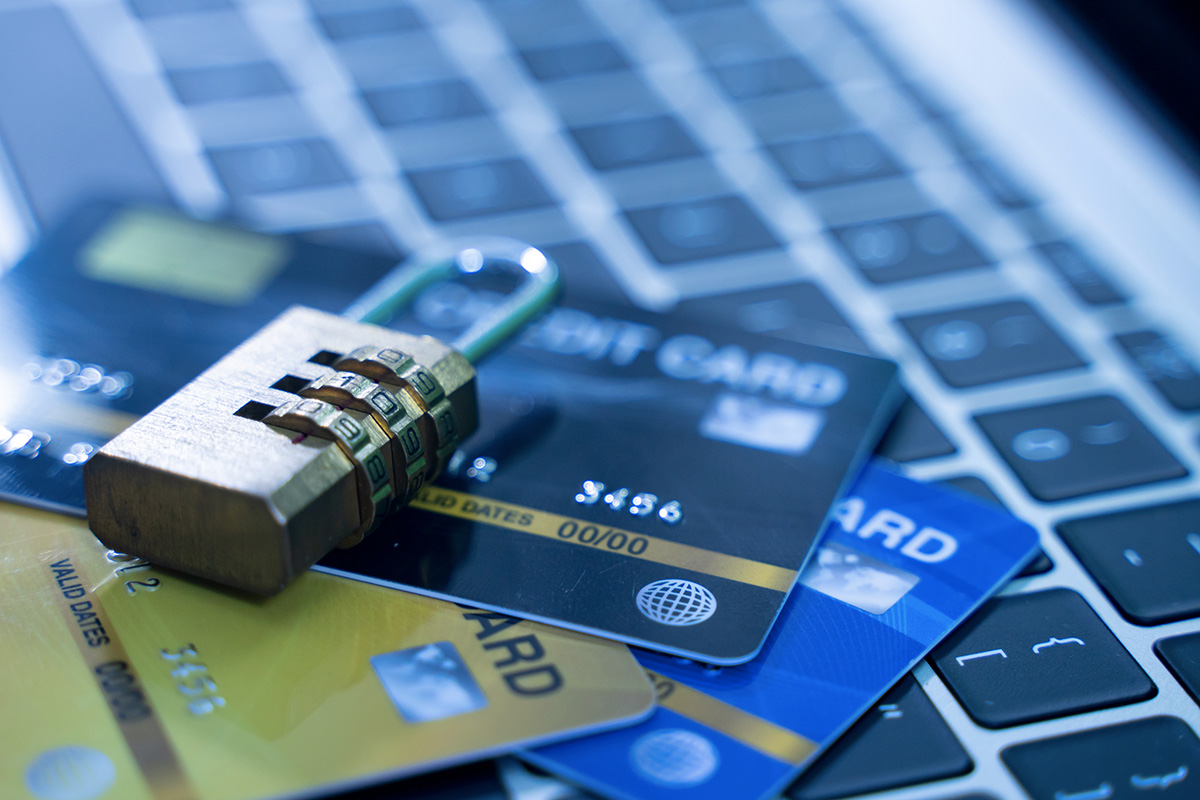
Merchants need to avoid credit card fraud at all costs. It
goes without saying getting hit by fraudulent orders affects the
bottom line of any business. I was reading an article a while
back about one of the bigger travel agencies on the Internet who
wasn’t able to get out of the red ink simply because they are
getting so many fraudulent orders. Now this company may think
they are too big to monitor all their transactions, but if they
are in the red because of it, well then it’s time to make some
changes.
Smaller merchants with big-ticket items can be wiped out with
just a few fraudulent orders; sometimes it only has to happen
once. I wrote an ebook, “Protect Your Merchant Account from
Fraud & Chargebacks” that goes into great detail on this subject.
I will highlight some of it here.
Chargebacks happen when a cardholder disputes a credit card
purchase. There are a variety of reasons a cardholder may
dispute a charge. Some examples of these are:
– Never receiving the item ordered
– Not getting what they thought they were buying
– Their credit card was stolen and they did not authorize the
charge
– They could just be a thief and use the chargeback clause to
their advantage
In the event of a chargeback, the card-issuing banks will
initiate a chargeback against the merchant. The funds for that
sale are pulled from the merchant’s bank account and the
merchant may or may not be notified of the chargeback and be
given the opportunity to dispute the chargeback. I was told by
one really big acquiring bank that they were not obligated to
notify the merchant of a chargeback. Anyhow, the merchant and
merchant bank knows nothing of the chargeback until it is over
and done with. Keep in mind, the customer’s card issuing bank is
the one who initiates chargebacks.
The most important part in accepting a credit card is to do your
best to verify the cardholder is actually placing the charge. On
the Internet, this can be done with AVS (Address Verification
System). Not a 100% guarantee, but it is the best available
right now. AVS will attempt to match a portion of the customer’s
credit card statement billing address against the billing
address the customer placed during the order. If you get an
address and zip code match, well chances are the actual
cardholder or someone authorized to use the card placed the
order. If you get a match of one or the other, then it is your
call if you want to accept the credit card. I have a merchant
who does between 13,000 and 15,000 online transactions per
month and will accept a partial match, but rejects all that come
back with no match. His chargeback rate is pretty low and this
seems to work for him. If you do not get any match, then you
need to sit on the order, jump up and down on it, and chew on it
for a while and try your best to get in touch with the customer.
If you cannot, then it is in your best interest to reject the
order. Now the limitation of the AVS system is that it only
works in America with American orders. There is no system in
place, as of yet, for accepting International orders. As the
attorney I interviewed in my ebook says, “You accept
International credit card orders at your own risk.”
There are a few hotspot countries you would be best to avoid
unless you have an established relationship with your client.
Let me preface this by saying, I draw this conclusion from my
own personal experience and the feedback I get from my
merchants, so take it for what it is worth. This is not gospel.
The countries are; any country that was part of the former
Soviet Union, and Malaysia. They seem to have a higher than
average amount of fraudulent orders placed from there.
Now for my most controversial comment, never accept an order
placed with a FREE email address! I have been laughed at and
scoffed at over this comment simply because there are so many
honest people who use free email and this means losing orders.
Simply put, you are correct. You will lose orders and sales and
maybe even money if you follow this rule. However, I don’t think
you will lose as much as you would if you accepted orders from
free email addresses though. I know one merchant doing $45,000+
in credit card orders per month from the Internet that was
following this rule. Then one day, he decided to throw the rule
out and increase sales, as a result he almost lost his merchant
account due to excessive chargebacks. Take it for what it is
worth. Statistics show that more then 50% of orders placed
from a free email address will be fraudulent.
There is more to a chargeback than meets the eye. Not only does
a merchant lose the actual inventory and the purchase price, but
there are also chargeback fees assessed to the merchant each and
every time. These fees add up because they are anywhere from $15
to $50 a pop. Consult your merchant account provider if you do
not know what fees you can be hit with. That is not all.
Merchants who have excessive chargebacks, this is again defined
by the provider (range from .5% to 2.5 %); a can lose their
merchant account. That is, get terminated without warning and
could end up on the MasterCard Match List, a.k.a. Terminated
Merchant File, which is looked at by other providers and if you
show up on it, this means you will not get a merchant account.
You can expect to stay on the list for 5 years too. There are
new rules and regulations that have cropped up with the card
associations. Visa has an International Fine for excessive
International chargebacks and MasterCard has a fine for
excessive chargebacks for high volume merchants. These fines are
in the several $1,000’s to over $100,000. I am in the process of
updating my ebook to reflect this along with an interview with
T.J. Walker of http://www.antifraud.com and hope to have it
ready within a few weeks.
If you are on the MasterCard Match List or know someone who is
there may be a solution. Contact the law office of Anthony L.
Ogden. He is the
attorney I interviewed in my ebook and his area of specialty is
merchant account law. Keep an eye on those transactions, use
some common sense and good judgment and things will be well with
your Internet business and merchant account.
My ebook, “Protect Your Merchant Account from Fraud &
Chargebacks,” is free to download.
————————————————–
You must be logged in to post a comment.